Who Am I, Really?
Self-Knowledge Gaps in Neurodivergent Development
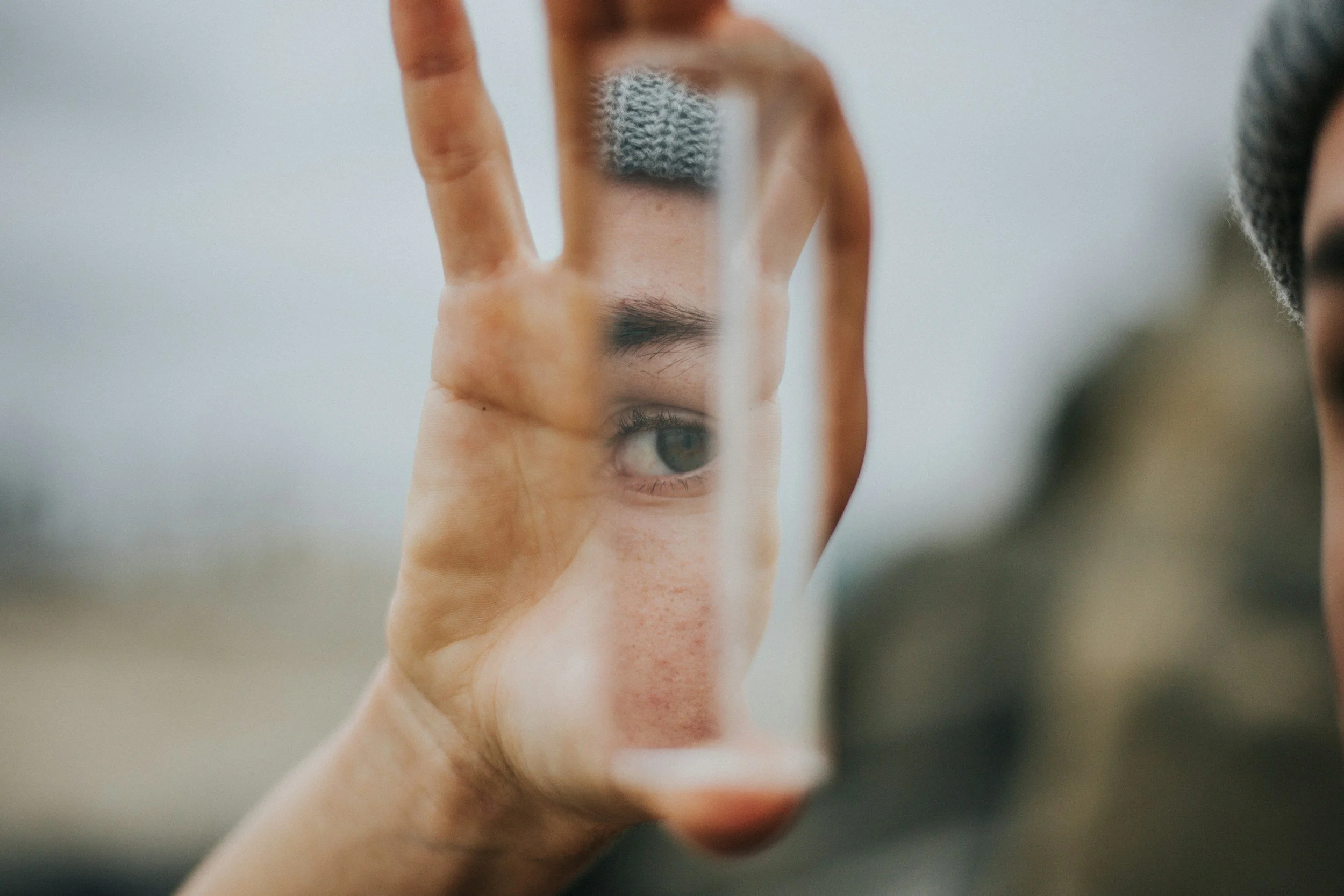
There’s a particular kind of question that lingers quietly in the background for many neurodivergent adults:
Who am I, really?
Not the version of me I show at work, or the one who knows how to make others comfortable, or the person I become when I’m burned out and dissociating on the couch, but the real me. The one I’ve rarely had space or permission to know.
This question isn’t just philosophical. For many, it’s a daily ache: a feeling of being unmoored, foggy, or distant from your own experience. If that resonates with you, you’re not alone. And more importantly, you’re not broken. What you’re feeling may be the result of gaps in self-knowledge that are especially common in neurodivergent development.
Let’s explore what that means — and how you can begin to find your way back to yourself.
What Is Self-Knowledge, and Why Does It Matter?
Self-knowledge is the ability to understand yourself from the inside out. It includes knowing your likes and dislikes, your values and needs, your physical and emotional cues, your identity, your dreams. It’s foundational for making choices, setting boundaries, and forming relationships that feel good and safe.
But for many neurodivergent people, self-knowledge is patchy at best. You might find yourself constantly second-guessing what you want, struggling to make decisions, or feeling like a chameleon — changing based on who you’re with, not because you're inauthentic, but because your internal compass has been buried for so long.
This isn’t a failure on your part. It’s a developmental outcome of growing up misunderstood.
Why Do Neurodivergent People Often Struggle with Self-Knowledge?
There are a few core reasons why many autistic, ADHD, highly sensitive, or otherwise neurodivergent people grow up without a strong sense of self.
1. Lack of Accurate Mirroring
From early childhood, we come to know ourselves in part by how others respond to us. But if your caregivers, teachers, or peers didn’t recognize or reflect your true emotional and sensory experience, it’s likely you learned to doubt yourself. Maybe your pain was dismissed as drama, your joy as immaturity, your overwhelm as laziness.
Over time, without accurate mirroring, your ability to trust your own perceptions can erode. You learn to look outward for cues instead of inward.
2. Chronic Masking and Performance
Many neurodivergent people, often unconsciously, learn to mask — to copy, suppress, or edit parts of themselves to survive in neurotypical spaces. This might mean forcing eye contact, mimicking speech patterns, ignoring discomfort, or pretending to be more “okay” than you are.
Masking helps you stay safe or accepted — but it often comes at the cost of self-awareness. If you’re constantly performing a version of yourself, it becomes hard to remember what’s underneath.
3. Disconnection from Sensory and Emotional Cues
Some neurodivergent nervous systems are highly sensitive; others are under-responsive. Many fluctuate between the two. When your body and emotions feel overwhelming or unreliable, it’s common to disconnect from them altogether. This dissociation might have helped you cope as a child, but as an adult, it can make it hard to access your desires, preferences, and needs.
4. Developmental and Relational Trauma
Finally, for many neurodivergent people, trauma — whether from bullying, medical neglect, school environments, or constant invalidation — leads to survival-based identities. Fawning, people-pleasing, perfectionism, and withdrawal become adaptations, not conscious choices. When survival becomes the priority, authenticity often takes a backseat.
What It Feels Like to Live with Gaps in Self-Knowledge
Living with these gaps can feel like drifting through life with no clear anchor. You might say things like:
“I don’t know what I like anymore.”
“I can’t tell if I’m tired or just avoiding something.”
“I always adapt to the people around me. I’m not sure who I am without them.”
“When people ask about my goals, I freeze.”
These are not just signs of confusion — they are signs of adaptation. Your system has done what it needed to survive. But that doesn’t mean you have to stay disconnected.
Reclaiming the Lost Self: A Slow and Gentle Process
The good news — and it is good news — is that your selfhood hasn’t disappeared. It may be buried, quiet, or tentative, but it’s still there. Rediscovering it is not about fixing yourself. It’s about creating enough safety and space for that quiet inner voice to begin speaking again.
This is slow work. It often begins with:
Curiosity instead of judgment: Let “I don’t know” be a doorway instead of a dead end.
Sensory and emotional journaling: Tracking how your body responds in different settings can rebuild inner awareness.
Creating environments where you don’t have to mask: This might be time alone, time in nature, or time with neurodivergent peers.
Noticing patterns across time: What small things reliably bring you comfort, joy, or clarity?
Letting yourself grieve: There may be grief in realizing how long you’ve lived disconnected from yourself. That grief is valid and part of the healing.
Therapy as a Space for Self-Rediscovery
Therapy — especially depth-oriented or somatic-based therapy with someone who understands neurodivergence — can be a powerful container for this rediscovery process.
It’s not about giving you a new identity. It’s about helping you feel into who you already are, beneath the layers of adaptation. It’s about learning to trust your body, your needs, and your voice, one small moment at a time.
Why Group Therapy Helps You Discover Yourself in Relationship
For many neurodivergent adults, self-knowledge doesn’t just emerge in quiet reflection — it also comes alive in relationship. This is where interpersonal process group therapy can be transformative.
The Haven, my interpersonal process group for neurodivergent adults, is built around this truth: we come to know ourselves more fully when we’re seen, felt, and responded to in real time — not just by a therapist, but by others walking a similar path.
In a group space like this, you begin to notice:
How often you automatically mask or monitor yourself
What you do when you feel misunderstood or awkward
What it feels like to let yourself be seen — just a little more — and survive it
How the roles you play in other relationships show up here, too
What it’s like to feel real, not just performative
This kind of therapy doesn’t just help you talk about relationships. It gives you the chance to experience them in a new way — in the here-and-now, with honest feedback, shared vulnerability, and the slow, profound experience of realizing: I’m not too much. I get to exist here.
Group offers something individual therapy can’t replicate. It works on a deep, unconscious level — helping your nervous system integrate belonging, connection, and self-trust through lived experience. Over time, you begin to feel more capable of navigating life outside of therapy, with greater discernment, emotional access, and inner clarity.
You Are Not Lost — You’re Becoming Known
If you’ve spent years not knowing yourself, it makes sense that the process of self-discovery feels daunting. But please hear this: you are not too late, too broken, or too far gone. The fact that you’re asking “Who am I, really?” means something in you is already reaching for truth.
And you don’t have to navigate that journey alone.
The Haven is a space designed specifically for neurodivergent adults who are ready to gently reconnect with themselves — beyond the masks, beyond the noise. Through reflective practices, community, and somatic-based support, we explore selfhood at a pace that honors your nervous system.
If this resonates, learn more about The Haven here — your inner world is welcome.

May the Force be with you,
Leanna Greenberg, LMHC/LPC
(licensed therapist, trauma-informed, neurodivergent-affirming)
Disclaimer: the information provided is for informational purposes only and is not intended as professional advice. The information does not constitute medical advice or diagnosis.
A Note on the Writing Process
I write these blog posts with the intention of offering thoughtful, compassionate reflections for neurodivergent individuals navigating life, healing, and therapy. To help with structure and flow, I sometimes use AI-assisted tools as part of my writing process. These tools support clarity and help me bring ideas to life more efficiently, but every post is based on my clinical experience, voice, and perspective.
Just like therapy, writing is a collaborative process, and I see AI as a quiet helper behind the scenes and not a replacement for human insight, depth, or care.
