Get To Know Your Nervous System
A visual map to help you understand your internal landscape — and begin to chart a new path through it.
Ever feel like you're constantly ping-ponging between high-stress panic mode and low-energy collapse? One day everything feels like too much — the next, nothing feels possible. You’re not lazy, broken, or overreacting. You’re in a nervous system pattern.
This free nervous system map offers a clear, compassionate visual guide to help you name what’s happening in your body — and why.
I use this nervous system map in both individual and group therapy as a shared language for tracking emotional states. It helps clients identify where they are internally, make sense of overwhelming reactions, and gently experiment with what might support more regulation, connection, and choice. Over time, it becomes a grounding reference point for self-understanding and growth.
This map is for you if you:
Struggle to find a middle ground between feeling on edge and totally shut down
Want to learn why you go into freeze, fawn, or intellectual overdrive
Are beginning to explore somatics, polyvagal theory, or trauma-informed healing
Crave a nerdy, metaphor-rich way of understanding your internal world
Are trying to track your states, patterns, and triggers — but don’t know where to start
More to come soon on how to read and use this map — including simple breakdowns of each state, how to recognize your patterns, and gentle practices to support nervous system flexibility. Stay tuned for upcoming guides and reflections to help you make the most of this tool.
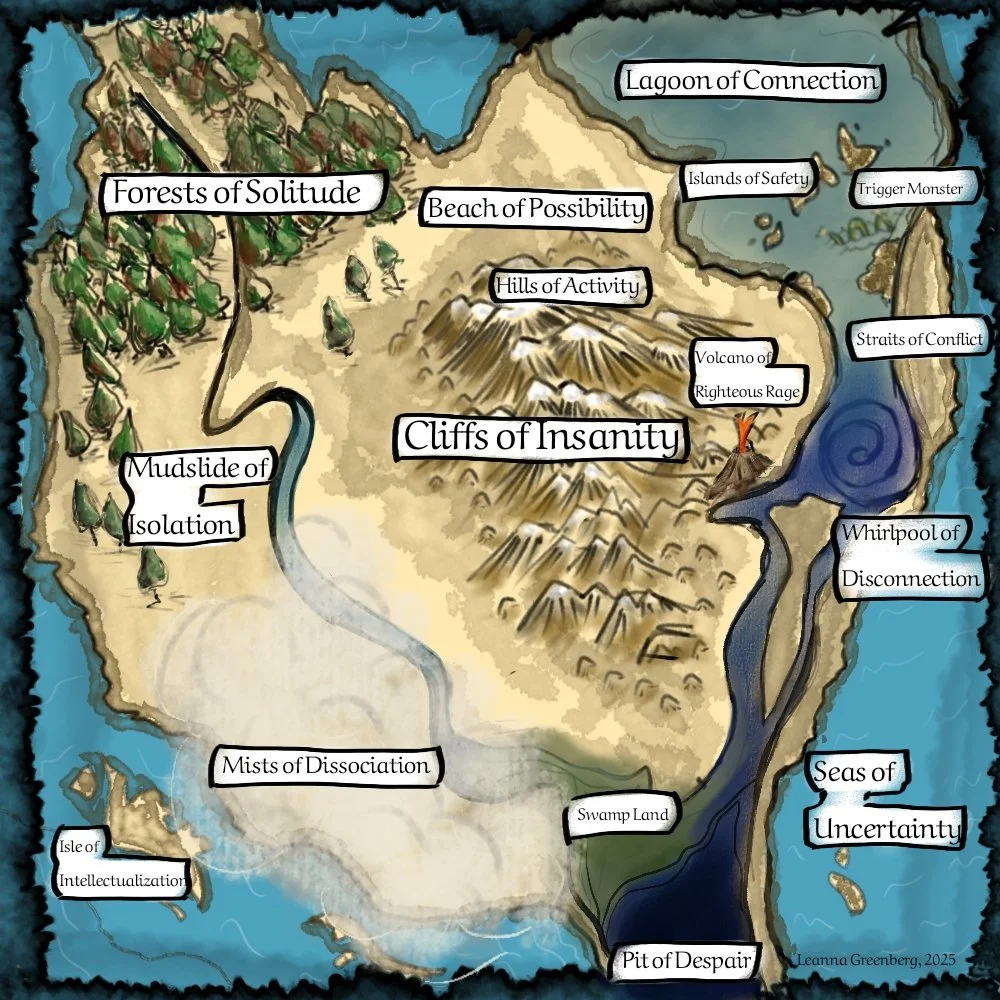
I created this map by hand, drawing inspiration from Deb Dana’s beautiful work translating polyvagal theory into everyday language and practice. It’s an original synthesis of her teachings and my own clinical experience. Please don’t reuse or reproduce this map without my express permission and clear credit — it’s a labor of love meant to support, not circulate without context.