
Navigating Neurodivergence with Trauma Therapy
“Understanding why people suffer, how they change,
and how to help them live satisfying lives is a fascinating
and important undertaking.”
Sommers-Flanagan
You can’t understand trauma without understanding neurodivergence
You can’t understand neurodivergence without understanding trauma
Diagnoses you might think you have
-

Anxiety
A whirling sensation in the pit of your stomach. Heat in your face. Racing and competing thoughts. It stops you in your tracks, limiting your life.
You don’t have to feel so overwhelmed all the time. Learn skills to ride the waves of emotion, to expand the window of emotion where you are still you, and develop skills to soothe the anxiety that’s plagued you.
-
Depression
There are episodes of sadness and crying, but mostly you feel numb, empty, and bored. There’s just a sense of something not being right, nothing feels comforting or good.
Depression can be baffling to experience. Maybe you even feel helpless. Learn how the strategies you developed to survive challenging and painful experiences are still acting to keep you small in the hopes of keeping you safe. Take back your space and your energy, even if you can’t remember a time before depression.
-
ADHD
You’ve often questioned if you might have ADHD. Trouble concentrating, scattered thinking, bouts of spontaneous productivity amidst seas of listless procrastination and lack of motivation. Sometimes you can start things, but you rarely finish them.
Trauma symptoms can feel like ADHD. And living in a Neurotypical world with ADHD can be traumatizing. Learn the neuroscience behind what’s happening and how you can support yourself while you gently heal. Healing can also involve finding strategies that work for your brain rather than trying to make it conform to someone else’s standards.
-

Autism
Maybe you’ve gotten a formal diagnosis or maybe you just have a sneaking suspicion that this could be you. Regardless, you probably have imposter syndrome about it and don’t feel like you’re allowed to claim this label. Am I right?
You’re socially uncomfortable and maybe disinterested in most humans. You maneuver through most social interactions with an internal rolodex of scripts around how you’re supposed to act and feel.
If you feel like an alien impersonating a human, working with me might help you learn who you are authentically - and even fall in love with being human.
Neurodivergent pain is deeper than anxiety and depression.
It’s trauma.
-

Unsatisfying Relationships
You often feel lonely, unappreciated, misunderstood, and even taken for granted. People are busy with their own lives and interests and you don’t want to be a burden, but you also want to feel important!
Trauma interferes with your natural capacity to endure and navigate the discomfort and uncertainty inherent in relationships. Let’s find the ways your past is blocking the love you could be feeling and help you achieve new experiences of closeness and connection.
-

Wasting Time
There are lots of things you want in your life, but you’re stuck on tik-tok (or your social media/tv show of choice). You don’t understand why you waste so much time, you’ve tried to get organized and motivated but attempts haven’t been sustainable.
Stop feeling guilty about how you’re spending your time. Learn to really enjoy relaxing! Enjoy your leisure time. AND feel more accomplished. Yes, it’s really possible.
-
Little Sense of Self
Maybe you don’t even know what you like or want to do with your time. Maybe you can’t take compliments because it just feels like you’re doing the bare minimum. Maybe you don’t know what your own preferences are because you’re very appeasing of others’ choices and just want to “go with the flow.”
Discovery yourself . A self you don’t hate, but one you love. We are all unique alive creatures and we are all worthy of love.
-

Chronic Illness or Pain
More and more studies are showing us the connection between adverse childhood experiences and adult health outcomes. Many of the clients I’ve met with trauma have chronic health conditions (and many of the clients I’ve met with chronic health conditions, have trauma). There are profound links between our emotional and physical health.
Learn about these connections and ways to support your physical well-being by doing trauma-healing.
-

Social Interactions are Overwhelming
Feeling highly sensitive to other peoples’ energy or expectations. Feeling anxious or even insecure about social interactions. A strong desire to avoid conflict, but conflict in relationships is structurally unavoidable. This sense of overwhelm can lead to avoiding social interactions altogether perpetuating sadness, loneliness, and reinforcing beliefs about worthlessness.
Grow your capacity to navigate big feelings. Reduce your baseline anxiety so you have more space between calm and overwhelmed. Enjoy being with others!
-

'Self-Care' Is Impossible
Who has the time for this? How does anyone do all of this? If you had parents who were overwhelmed and unable to meet your emotional needs you might find that the concept of self-care is baffling and feels completely unattainable. The demands of productivity outweigh the idea of indulging something that just doesn’t feel important or useful.
You know what you’re “supposed” to do. But that just leaves you feeling confused and guilty. How about deeply feeling that you’re worth taking care of? Taking care of yourself can be fun, pleasurable, and meaningful.
-

Nothing Feels Good Enough
I have tried everything but I can’t do what I am expecting from myself. Other people are doing this, why can’t I? Maybe you get so frustrated that you find even starting something new almost impossible.
Feel delighted in what you can do and create. Express yourself with joy and self-assurance.
-

Big Signals or Mixed Signals
Maybe your facial expression and body language don’t communicate what you’re feeling inside. People sometimes don’t recognize when you’re genuinely upset or if you’re joking. Do you laugh when you’re really upset? When you do have a clear emotional expression, maybe it’s very big and people say they feel blind-sided.
Learn to better read your internal cues and find greater alignment between how you feel inside and how you can express yourself.

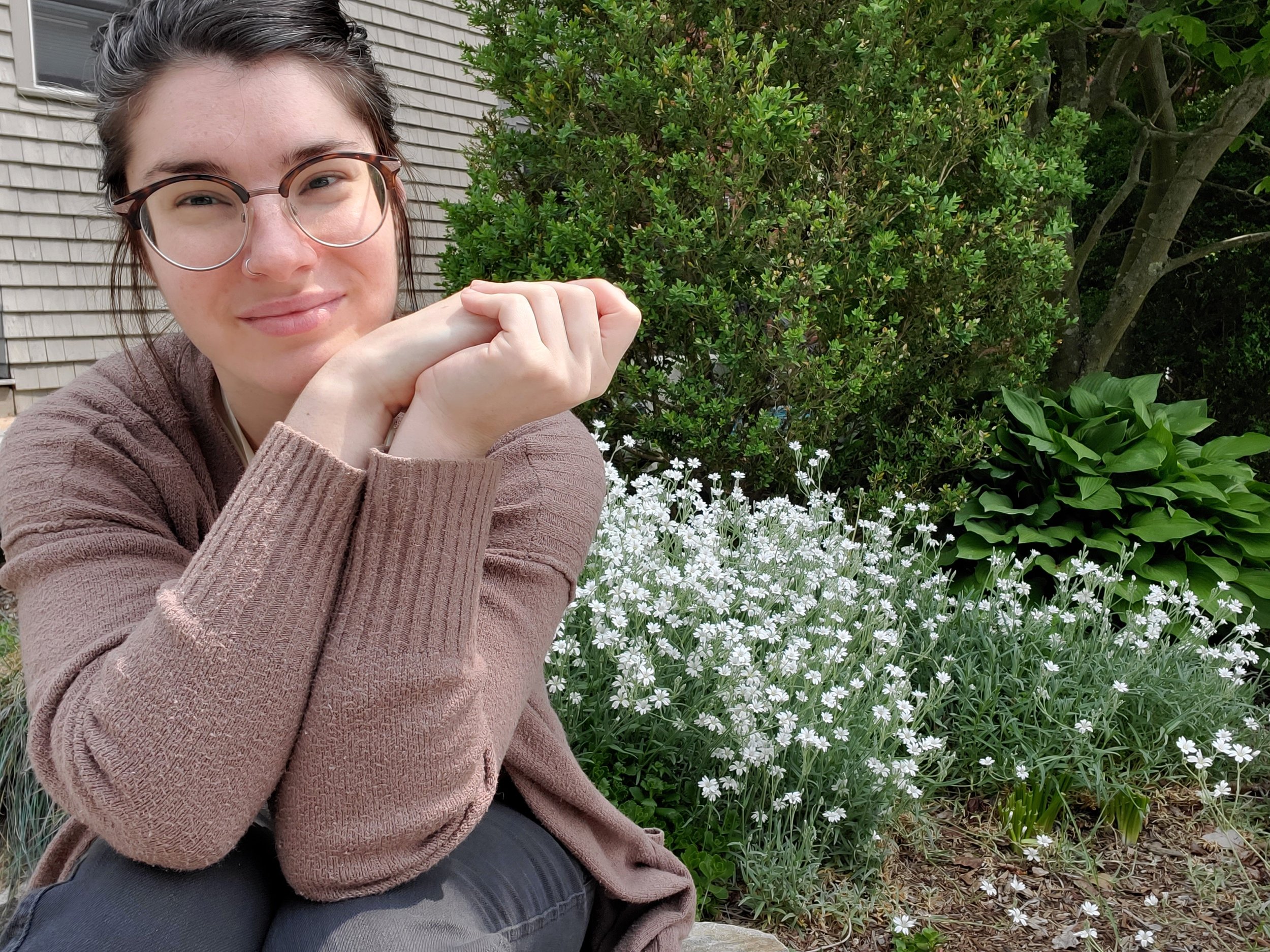
Hi, I’m Leanna!
I’m a deeply thoughtful nerdy type who just wants to understand everything, including the unfathomable. So I read and I learn and I grapple. This includes engaging with wisdom and teaching from the conventional (psychology, sociology, and neurobiology) as well as the unconventional (archetypes, stories, yoga, shamanism, religious and spiritual practices of all kinds).
I’ve learned that trauma lives in the body, mind, and spirit (defined loosely as your energy or vitality). If you want to help someone’s healing, you must work in all three realms.
Trauma lives in the underbellies and mysterious world below the level of consciousness. This is why traditional talk therapy practices may not have been enough for you. If you’ve tried and tried and tried to heal and change, but haven’t been successful, it’s easy to think you’re doomed. The problem is not you, it’s bigger than you. Conventional psychology and the Western medical world are extremely limited to provide the kind of compassion, empathy, support, and guidance that is really needed for each of us - but especially for those of us with complex trauma.

Want to receive letters from me?
I write love letters to the exhausted, the sensitive, the thoughtful ones trying to survive late-stage capitalism with their integrity intact.
Sign up to receive honest reflections, gentle encouragement, and support that doesn’t require you to be okay first.